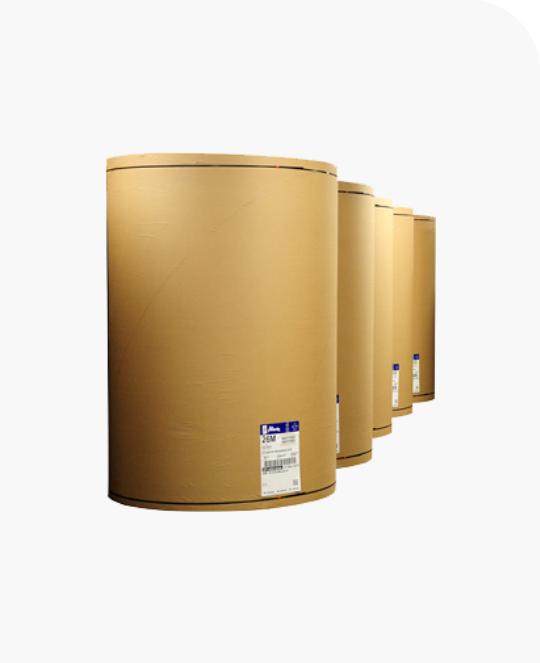
The first new containerboard mill in Canada in over 25 years, opened in April of 2006 in Scarborough.

About New Forest

New Forest is joint venture of Atlantic Packaging and Mitchel-Lincoln Packaging. Atlantic Packaging, based in Scarborough, Ontario, manufactures a wide range corrugated products. It is the largest private sector employer in Scarborough, Ontario, with over 20 manufacturing and distribution facilities and a large truck fleet. Mitchel-Lincoln Packaging, based in Saint-Laurent, Quebec, manufactures corrugated boxes in two plants.

Backgrounder
A win-win-win project

New Forest paper mill is good news for our customers, the economy and the environment. Opened in April, 2006, the mill manufactures the liner board and medium used to make corrugated cartons (packaging for consumer products, ranging from pizza boxes to automotive parts). The feedstock is paper fibre recovered from used corrugated cartons.

Good news for our customers

  • meeting the current and future needs of our customers by producing the paper for millions of new corrugated cartons per year in various weights and strengths.
  • strategically located to meet the needs of Ontario’s manufacturing sector, a major buyer of corrugated cartons

Good news for the economy

  • creation of about 100 high-paying manufacturing jobs
  • reinforces Atlantic Packaging’s status as the #1 private sector employer in Scarborough, Ontario
  • first new containerboard mill opened in Canada in over 25 years
  • funded entirely by Atlantic Packaging and Mitchel-Lincoln Packaging, the companies that jointly own New Forest
  • single largest construction project in Metropolitan Toronto in 2005-2006

Good news for the environment

  • the recycled corrugated cartons processed by the mill will annually save the fibre equivalent of six million trees, or a forest covering a
    30-square kilometer area,
  • the need for landfill will be reduced annually by 11,000 trucks. If these trucks were parked end-to-end, the line would extend from Toronto to London, Ontario
  • water used in the manufacturing process picks up fibres and starches that are consumed in an anaerobic process; water leaving the plant meets all government regulations
  • sludge left over by the anaerobic process can be composted or burned at controlled temperatures to produce steam (a step that displaces fuels which produce green house gases)
  • the material remaining after combustion is a form of clay that can be sold to cement, roofing and rubber manufacturers
  • steam plumes, a regular site at many rural mills, will be limited by a plume control system that removes water from heated air leaving the plant
  • noise levels will be below the ambient (existing) noise produced by the surrounding community
  • no noticeable smells because the production system is self contained

“Thanks to the environmental controls and state-of-the-art manufacturing processes, you could drive by the New Forest mill and not even know what it is,”

Gerry Murray, Director of Mills.

 
  All rights reserved® New Forest Paper Mills LP. 2008 designed & produced by: